
Traditionally, most PSUs have been cash-rich, which added to their value. However, the government has been tapping regularly into their cash resources to boost revenue for the exchequer

The surge in oil prices has also affected the rupee, which hit a 6-week low of 70.25 on Friday against the dollar.

Going ahead, experts say, the fundraising trend in the primary market will depend on how the secondary market performs against the backdrop of the outcome of general elections and global cues.

With the frontline Indian benchmark indices trading near all-time highs ahead of the general elections that begin later this week, Marc Faber, Editor and Publisher of "The Gloom, Boom & Doom Report" tells Puneet Wadhwa that the Indian stock market is relatively expensive, especially the index (large-cap) stocks.

There will be pressure on the fiscal situation, especially at a time when the monsoon can also disappoint. More populist expenditure is on cards if the mandate is a hung Parliament or a coalition government.

Even though stocks may remain volatile in the run-up to the polls, as political parties stitch up alliances, the long-term trajectory for the markets remains bullish.
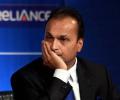
While RCom owes Indian banks close to Rs 45,000 crore, Ambani has lost close to $408 million of personal wealth year-to-date until Tuesday.

The underperformance comes amid liquidity concerns in the non-banking finance companies space and Essel Group default news.

The government is expected to dole out some populist policies, especially for the rural / farm sector while presenting the interim budget, given that the country is heading towards general elections over the next few months.

'The probability of another negative year in 2019 is low.'

Of these 26, Bajaj Finance, Associated Alcohols and Breweries, Garware Technologies, Filatex India, Tasty Bite Eatables, Aarti Industries and GMM Pfaudler saw an over 10-fold surge in price since 2014.

Analysts caution a non-BJP government is not an impossible scenario. In case of a Modi-led coalition, they advise investors to focus on discretionary consumption, select private banks and financials, RIL, housing, and IT.

The polls are being viewed as a run-up to the general elections scheduled for May 2019 and will test the popularity of the government and its policies amid rising crude oil prices

Since last month, the realty (down 23%), auto (down 16%) and finance (down 14%) indices have underperformed the market by falling over 13%, as against 8% decline in the benchmark indices
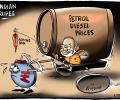
Even as rising crude oil prices, trade war fears and a sliding rupee cast a shadow on market sentiment, Nischal Maheshwari, chief executive officer for institutional equities and advisory at Centrum Broking, tells Puneet Wadhwa that in the next one year, the outcome of the 2019 general election is a bigger challenge for the market.

The recent three-bank merger seems to be grossly negative for Vijaya Bank and Bank of Baroda in the short term, as the negative net worth of Dena Bank will have to be absorbed by the merged entity

Stretched valuations and slowdown in DII flows are some of the reasons why Goldman Sachs cut its India rating to 'market-weight'

Mark Mobius, co-founder, Mobius Capital Partners, tells Puneet Wadhwa that investors should concentrate more on "value" rather than momentum, and on good small- and medium-sized companies rather than large-caps.

While Mcleod Russel, ADF Foods, Indiabulls Real Estate, DCM Shriram and BSE have announced buyback through open market route, the remaining 23 companies plan to buy back their shares via tender offers

High networth individuals selling stocks to buy real estate is among the key risks for the Indian markets.
 © 2025 Rediff.com - Investor Information - Advertise with us - Disclaimer - Privacy Policy - Sitemap - Feedback - About us - Terms of use - Grievances